

Indonesia is the fourth most populous country on earth, home to over 140 million working-age people, and the fastest-growing digital economy in Southeast Asia. Foreign companies hiring there pick up developers, designers, data analysts, and customer success talent at competitive rates.
The problem is not finding the talent. The problem is staying compliant once you hire them.
Indonesian employment law is layered. You have the national Manpower Law (No. 13 of 2003), the 2023 Omnibus Law on Job Creation, mandatory social security through BPJS, a religious holiday bonus (THR) that triggers real penalties if you miss it, and province-level minimum wages that update every year. Get any of these wrong and you are looking at back-taxes, BPJS arrears, or forced contract reclassification.
This guide covers what a foreign employer needs to know about employment law, payroll compliance, statutory benefits, termination rules, and the entity-versus-EOR decision. Numbers are sourced from Indonesian regulatory filings and current BPJS circulars.
Why Foreign Companies Are Hiring in Indonesia Right Now
Indonesia’s digital transformation sector is projected to reach $49.57 billion by 2029. Tech hubs in Jakarta, Surabaya, and Bandung are producing engineers and product specialists that global companies actively recruit. Demand is highest in AI, cloud computing, cybersecurity, and automation roles.
Beyond tech, Indonesia offers a cost-competitive talent pool for operations, finance support, and customer-facing roles. The IMF projects 5.1% GDP growth for 2026, making it one of the few large economies still expanding at that pace.

The same regulatory complexity that protects Indonesian workers creates real friction for foreign employers without local infrastructure. This guide covers the rules that create that friction.
Indonesian Employment Law: What You Need to Know
The Omnibus Law on Job Creation
Law No. 6 of 2023 ratified the Government Regulation on Job Creation (the Omnibus Law), amending significant portions of the Manpower Law. Key changes relevant to foreign employers:
- Fixed-term contracts (PKWT) now carry a compensation requirement equal to one month’s salary per year of service upon expiry, regardless of whether the contract ends naturally or early
- Sectoral minimum wages (UMS) were restored for industries with unique working conditions following a Constitutional Court ruling
- Worker misclassification liability increased. Indonesian courts are actively enforcing reclassification of contractors to employees when the working relationship resembles full-time employment
Contract Types: PKWT vs. PKWTT
Indonesia recognizes two primary employment contract types:
- PKWT (fixed-term): Maximum duration of two years, renewable once for up to one year. Written contracts are compulsory. Probation periods are not permitted under PKWT.
- PKWTT (permanent): Allows a probation period capped at three months. Notice during probation is seven days. Post-probation terminations require a minimum 30-day notice.
Electronic signatures are legally valid under Indonesia’s ITE Law (No. 11 of 2008), and Government Regulation 35/2021 explicitly permits employment agreements to be drafted as electronic documents.
Working Hours and Overtime
Standard working hours are 40 per week, structured as either five 8-hour days or six 7-hour days. Overtime is mandatory beyond those thresholds. Overtime rates are 1.5x for the first hour and 2x for subsequent hours on regular workdays, with higher multipliers on rest days and public holidays.
Payroll and Tax Compliance in Indonesia
Province-Level Minimum Wages: The UMP vs. UMK Trap
Indonesia has two layers of minimum wage: the provincial minimum wage (UMP) and the regency or city minimum wage (UMK). UMK rates are set by local governors and are frequently higher than the provincial UMP, sometimes significantly so.
⚠️ Critical compliance point: Many foreign employers assume Jakarta has the highest minimum wage in Indonesia because it is the capital. It does not. For 2026, Bekasi City (West Java) has the highest UMK at IDR 5,999,443 per month, Karawang Regency at IDR 5,886,853, and Bekasi Regency at IDR 5,938,885. Jakarta’s UMP sits at IDR 5,729,876. Paying a Bekasi-based employee at the Jakarta rate underpays them by law.
The UMP for West Java province is IDR 2,191,232 per month. That figure applies to entry-level employees with under one year of service in regencies that have not set a separate UMK. It does not apply to industrial cities like Bekasi or Karawang, where the UMK governs instead.
Minimum wages update annually under Government Regulation 49 of 2025, using the formula: inflation + (economic growth x alpha), where alpha ranges from 0.5 to 0.9. For 2026, most provinces increased wages by 5% to 7%.
The SUSU Requirement for Employees Beyond One Year
The statutory minimum wage applies only to employees with less than one year of service. Once an employee crosses the 12-month mark, Indonesian law requires the employer to pay wages under a Structure and Scale of Wages (Struktur dan Skala Upah, or SUSU), which must exceed the applicable minimum wage.
Paying a three-year employee at the minimum wage without a documented SUSU structure is treated as a compliance violation by the Manpower Office (Disnaker). Foreign employers scaling headcount in Indonesia frequently miss this requirement because it is not triggered at hire but at the one-year mark.
Income Tax: PPh 21 and the TER System
Indonesia uses progressive income tax brackets under PPh 21. The 2026 rates:
- 5% on income up to IDR 60 million per year
- 15% on IDR 60 million to IDR 250 million
- 25% on IDR 250 million to IDR 500 million
- 30% on IDR 500 million to IDR 5 billion
- 35% on income above IDR 5 billion
Since January 2024, employers use the TER (Average Effective Rate) system for monthly withholding from January through November. December uses the full progressive brackets for the annual reconciliation. PPh 21 must be remitted by the 10th of the following month via DJP Online.
Non-taxable income (PTKP) starts at IDR 54,000,000 per year for individuals, with additional deductions for a non-working spouse (IDR 4,500,000) and up to three dependents (IDR 4,500,000 each).
BPJS Contributions: The Full Breakdown
BPJS is Indonesia’s mandatory social security system, split into BPJS Ketenagakerjaan (employment) and BPJS Kesehatan (health). Employer enrollment is required from the first working day.
| BPJS Scheme | Employer Rate | Employee Rate |
|---|---|---|
| BPJS Ketenagakerjaan – Old Age (JHT) | 3.7% | 2% |
| BPJS Ketenagakerjaan – Work Accident (JKK) | 0.24% to 1.74% (risk-based) | 0% |
| BPJS Ketenagakerjaan – Death (JKM) | 0.3% | 0% |
| BPJS Ketenagakerjaan – Job Loss (JKP) | 0.22% | 0% |
| BPJS Kesehatan (National Health Insurance) | 4% | 1% |
| Pension Program (JP) | 2% | 1% |
| Total Estimated Employer Cost | ~10.24% to 11.74% of gross salary | ~4% |
Source: BPJS Ketenagakerjaan circular B/1226/022026, February 25, 2026. JKK rate varies by industry risk classification.
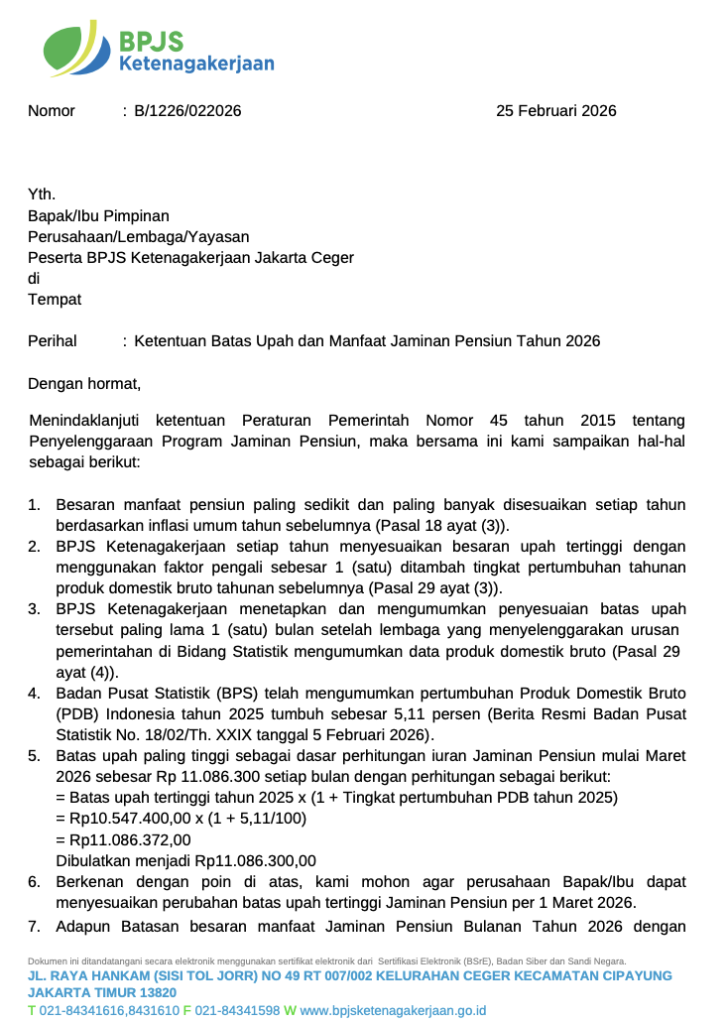
Two salary caps apply. BPJS Kesehatan uses a ceiling of IDR 12,000,000 per month for contribution calculations. The JP Pension Program uses a ceiling of IDR 11,086,300 per month, updated from IDR 10,547,400 effective March 2026 under the same circular. For employees earning above these thresholds, effective contribution rates are lower as a percentage of gross salary.
BPJS penalties for late or missed payments are material. A 5% monthly late fee applies to outstanding contributions, with an IDR 30,000,000 cap per incident. If contributions to BPJS Kesehatan lapse, the employee’s healthcare access is suspended. If the employee requires hospital treatment during a suspension period, the employer is typically liable for the full cost. Late BPJS registration also triggers backdated contributions from the employee’s start date.
Benefits Obligations: What Indonesian Employees Are Entitled To
The THR Religious Holiday Bonus
The Tunjangan Hari Raya (THR) is a legally mandated bonus. It equals one full month’s gross salary for employees who have completed 12 months of service. Employees with less than 12 months receive a prorated amount: (months of service / 12) x one month’s salary.
THR must be paid no later than seven days before the employee’s main religious holiday. For Muslim employees this is Eid al-Fitr (Lebaran). For Christian employees it is Christmas. Missing this deadline or underpaying triggers administrative sanctions and potential criminal liability for willful non-payment or repeated violations under the Manpower Law.
Statutory Leave Entitlements
| Leave Type | Entitlement | Notes |
|---|---|---|
| Annual leave | 12 paid days per year | Accrues after 12 months of service |
| Public holidays | ~15 days per year | Government-declared; number varies annually |
| Sick leave | Full pay, months 1 to 4 | Requires a doctor’s certificate |
| Sick leave | 75% pay, months 5 to 8 | Same condition |
| Sick leave | 50% pay, months 9 to 12 | Same condition |
| Maternity leave | 4.5 months total | 1.5 months pre-birth, 3 months post-delivery |
| Paternity leave | 2 paid days | |
| Bereavement leave | 2 paid days | Immediate family only |
Termination Rules: The Highest-Risk Area for Foreign Employers
Indonesian termination law is employer-restrictive by design. Before initiating any termination (PHK), the employer must document genuine efforts to prevent it. Failure to do so gives the employee grounds to contest the termination in Industrial Relations Court.
Lawful grounds include business closure, genuine redundancy, and misconduct. Even then, the severance calculation is layered:
- Severance pay: 1 month’s salary for under one year of service, up to 9 months’ salary for over eight years
- Service pay: Additional long-service payment layered on top of severance based on years employed
- Compensation pay: Covers untaken leave, housing allowances, and other entitlements at termination
Redundancies affecting 10 or more employees require bipartite consultation with workers or their union before any layoff proceeds. Skipping this step makes terminations legally contestable.
Misclassification risk compounds this. In 2023, Indonesia’s Supreme Court ordered a technology company to retroactively convert 200 contractors to employee status, triggering BPJS arrears plus full severance payouts. An EOR structure eliminates this exposure because all hires are employees from day one.
Entity Setup vs. EOR: A Practical Comparison
Many foreign companies consider setting up a local PT PMA (foreign-owned limited liability company) to hire directly in Indonesia. For most companies hiring fewer than 20 people into non-revenue-generating roles, the numbers do not support it.
| Factor | Own Indonesian Entity | EOR (Deel) |
|---|---|---|
| One-off setup cost | Up to IDR 10.4 billion | IDR 0 |
| Ongoing annual compliance cost | IDR 150 to 300 million per year | IDR 0 |
| Time to first hire | 10 to 12 weeks | 3 business days |
| Liability for fines and audits | Your company (100%) | Shifted to EOR provider |
| Resident directors required | Yes (2 minimum) | No |
| BPJS and payroll filing | Managed in-house | Managed by provider |
| Province-level wage tracking | Manual | Managed by provider |
Source: Deel Indonesia EOR data, eorHQ Indonesia analysis 2026.
For most foreign employers hiring Indonesian talent to serve global operations, the EOR model makes sense until Indonesia becomes a strategic, revenue-generating market in its own right.
A note on EOR limitations. EOR fees scale with headcount and salary levels. At higher volumes, entity costs may become competitive. Some EOR providers also apply restrictions on equity compensation for EOR employees and on IP assignment clauses in certain contract structures. These are provider-specific policies, not universal constraints. Verify the terms with any provider before signing.
How Deel Handles Indonesian Compliance
Deel operates a wholly owned legal entity in Jakarta. That means Deel holds the BPJS employer registration numbers, signs employment contracts as the legal employer, and carries direct liability for filings and penalties.
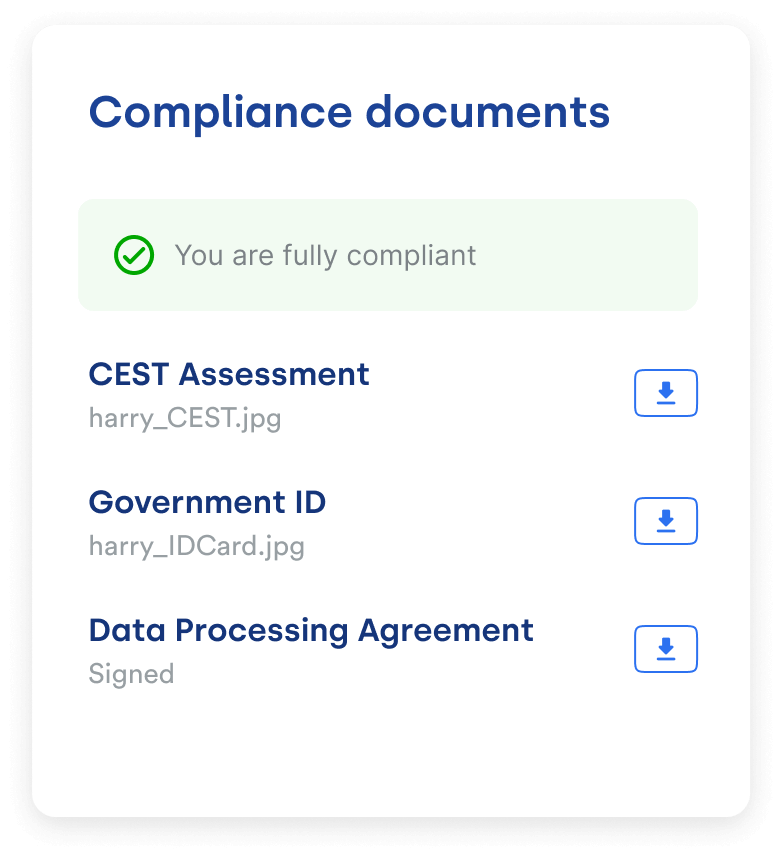
What Deel manages from day one:
Core compliance
- PKWT or PKWTT contract generation in Indonesian and English, with mandatory clauses built in and local counsel review
- BPJS Ketenagakerjaan and BPJS Kesehatan enrollment and monthly remittances, with the updated JP ceiling of IDR 11,086,300 applied from March 2026
- PPh 21 withholding using the TER system, with December reconciliation and e-SPT filing
- SUSU compliance monitoring for employees crossing the 12-month service threshold
Payroll and wage tracking
- THR calculation and automated scheduling seven days before each employee’s religious holiday, so the deadline does not slip
- Province-specific minimum wage and UMK tracking, updated annually via the Deel Compliance Hub
- Bilingual payslips showing BPJS deductions, as required by Indonesian law
Mobility and alerts
- Work permit (KITAS/RPTKA) sponsorship for foreign national hires through Deel Mobility
- Compliance alerts when legislative changes, minimum wage updates, or public holiday decrees affect payroll
Note that Deel’s EOR employees in Indonesia are paid based on DKI Jakarta wage rates, reflecting Deel’s entity location. This is a Deel-specific operational policy. Providers with entities in other provinces may apply different base rates.
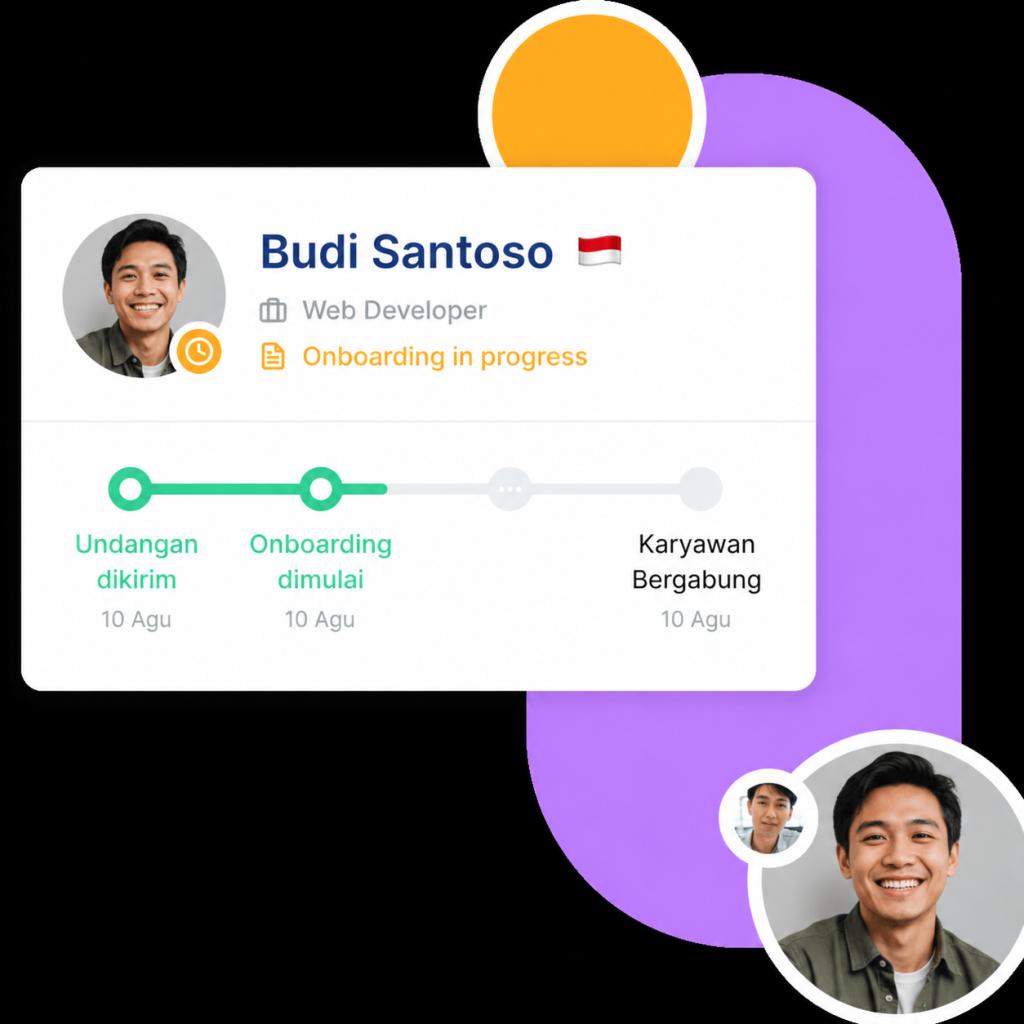
Average onboarding time for Indonesian employees through Deel is three business days. Entity setup takes 10 to 12 weeks.
Start Hiring in Indonesia Without the Compliance Risk
Lebaran comes every year. So does the seven-day THR deadline. So does the annual UMK update from the governor of West Java that quietly makes your Bekasi payroll non-compliant overnight. And so does the 12-month mark when your “contractor” legally becomes an employee entitled to BPJS back-contributions and severance.
These are not edge cases in Indonesia. They are the calendar.
Deel’s Indonesia EOR runs on that same calendar. THR is scheduled before Lebaran. UMK rates update by regency after each governor’s decree. SUSU compliance triggers automatically at month 13. BPJS contributions file by the 10th.
Start hiring in Indonesia with Deel and get your first compliant hire onboarded in three business days, no entity required.
Affiliate Disclosure: This article contains affiliate links. If you click through and purchase a plan, a commission is earned at no extra cost to you. The steps, observations, and recommendations in this guide are based on direct experience with the migration process and are not influenced by the affiliate relationship.
Disclaimer: This article is for informational purposes only and does not constitute legal or tax advice. Employment regulations in Indonesia are subject to change. Consult a qualified legal professional for guidance specific to your situation.